

As We Bloom | Mia Bolton


As We Bloom
Wisdom From Extraordinary Everyday Women And Gender Nonconforming People
Mia Bolton is a writer, surfer, and activist whose debut book As We Bloom offers a heartfelt exploration of healing, identity, and community through the voices of 20 women and gender nonconforming individuals. Rooted in her own journey—from childhood journaling in Maryland to surf breaks across the globe—Mia intertwines her personal story with those of others living boldly beyond societal norms. The result is a deeply human, vulnerable, and hopeful narrative about rediscovering self and connection through movement, storytelling, and the ocean.
In this interview with Withitgirl, Mia shares the seven-year journey behind the book, her relationship to surfing, and her commitment to justice and representation in outdoor culture. With insight on writing, activism, and the beauty of everyday moments, she reflects on the power of community and the importance of showing up—messy, real, and resilient. As censorship grows and marginalized voices are pushed aside, As We Bloom arrives as both a resistance and a reminder: there’s no single way to live a beautiful life.
Mia tells us a little about yourself, your background, family and how your journey as a writer began?
It’s funny, how I began my writing journey is actually the opening to the first chapter in the book! I wrote my first “book” when I was in kindergarten – pink notepad papers stapled together and an attempt to sell it to my dad for one whole dollar. I think we still have it somewhere.
That’s the kind of family I was fortunate to grow up in. I had hard-working and loving parents, and four siblings (three older, one younger) that I was, and remain, very close to. We lived in a townhouse in the suburbs of Maryland, between Baltimore and Washington, DC – it was quaint and we had more than enough. It wasn’t until much later in life that I realized how much my parents sacrificed to provide that for us (as I suppose is typical of most people who come to see their parents as human beings doing their best in the world).
Growing up, reading and writing settled among my favorite pastimes – both as a way to get lost in my own creativity and to ground myself for my own mental health. I still journal every morning over coffee. Professionally, I wrote most about what I knew – as a collegiate swimmer and swim coach, I wrote for USA Swimming’s magazine. As a surfer and water photographer, I often interviewed and wrote about inspiring people in the surf community, including Ashley Lloyd, Makala Smith, Andy Davis and Roisin Carolan, for publications like Foam Symmetry, Pacific Longboarder Magazine and Surfline, to name a few. I did this because it was fun, because it brought me closer to my community, and because it deepened my own understanding of the things that I loved and felt most drawn to.

Describe your connection to surfing or water, your journey, its impact on you, the type of boards you ride, and the shapers.
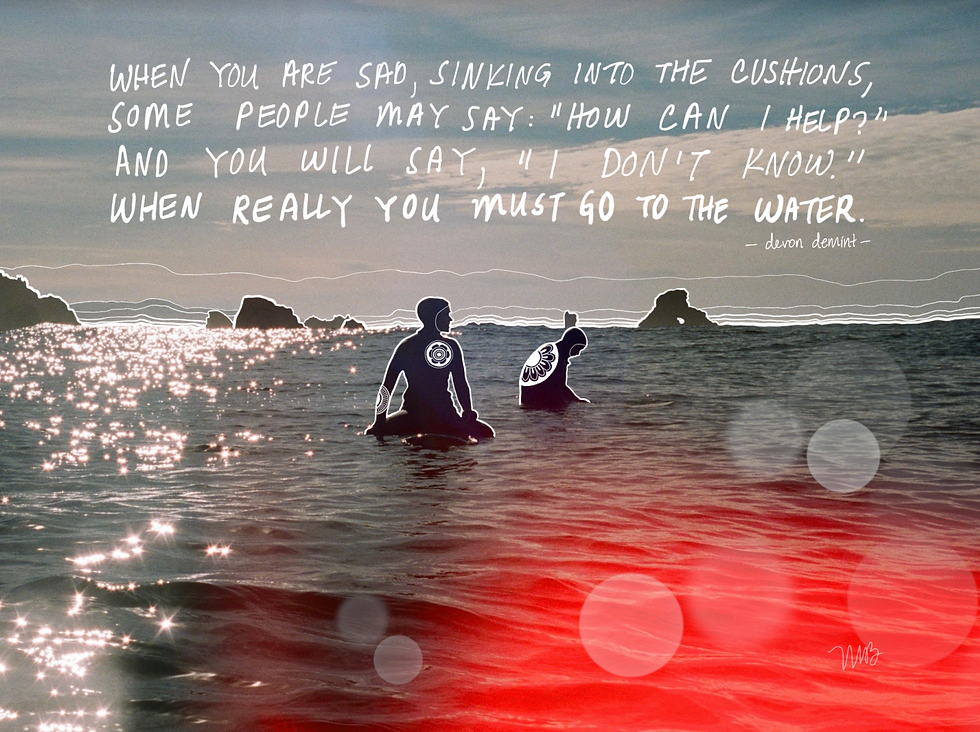
What a question! The grandeur of the ocean is beyond comprehension to me, and I’m perfectly at peace with that. So I consider my relationship with her symbiotic, harmonious, profoundly respectful and the purest kind of love. I made a series of postcards with my friend Devon DeMint that attempts to capture an ounce of this connection women have with the ocean, overlaying her poetry with some of both of our photos, and bringing them to life with my doodles. You can check them out here.
I’ve been drawn to water since I was young, really. I have very early memories of getting into the beach in Ocean City, Maryland, with my Dad. He would body surf the waves right up onto the shore, and so naturally, I did too. At home, I spent every summer at the neighborhood pool I could walk to from our house – playing, lifeguarding, swimming on the team and in local swim meets, and coaching the team. That became collegiate swimming and beach lifeguarding, and then a move across the country to San Diego when I was 22, to be more immersed in an ocean-adjacent lifestyle. Since then, I’ve surfed around the world, including the frigid waters of Tofino, Canada, and coastal Oregon, as well as the warm waves of Australia, Hawai’i, Mexico, and Southeast Asia. Amidst it all, California holds a very special place in my heart for rolling, longboard waves and a sense of nostalgia I can’t quite place.
I used to surf with a friend when I lived in Hawai’i who, every time we would get out of the water, would stand on the shore with her feet in the wet sand as the white water lapped at her toes and bow her head, close her eyes, and whisper a simple thank you to the ocean. I started doing it with her and have continued because it feels so right.

Right now, I’m mostly riding my Bing 9’2” Pocketknife longboard and my Bing 7’4” Collector midlength – both single fins. San Diego is where I really learned how to surf and what surfing meant to me, deepening my respect for the company Bing Copeland started more than 60 years ago and the boards Matt Calvani continues to shape by hand.
I also have a 7’9” midlength shaped by Rachel Lord, a 5’2” Almond Surfboards fish, and a 5’4” fish that I shaped myself, and has wooden twin fins my friends glassed on. Oh, and a potato-chip thin, quad-fin fish that I won from the Women’s Surf Film Festival almost ten years ago now! I love all of them so much – they each have their own individual story.

Share insights on surfing culture, your activism, and writing, work, and photography projects.
Most people who know me know that I care deeply about justice, equality and freedom for all people – in particular, people that have been pushed to the margins in history and still today. Surfing isn’t immune from this. Hawaiian and African people surfed as part of their cultures long before it was colonized and today, communities of color still don’t have the same access to surfing and to the ocean in general. The sooner we recognize this, the sooner we can truly work to create spaces where everyone feels welcome. There are groups already doing this work – like Salted Roots, Courage Camps, City Surf Project, and many more. Queer people also haven’t historically been welcome in these types of outdoor spaces, but groups like QueerSurf are changing that, too.
Generally, I think we’re feeling a shift in women’s surfing as well. We’re over the objectification and gross sexualization of our bodies over our skill. More and more I’m seeing women push the boundaries of what’s possible in surfing (like Caity Simmers), while thankfully seeing diversity in bodies, abilities, ages, languages spoken. And, on a daily basis, I’m seeing more women, queer people and people of color in the lineup.
On a global scale, the surf community is uniting more and more to take a stand for the things that impact all of us. I’ve signed international surfer petitions and collaborated on art projects surfers from other parts of the world to stop the genocide in Gaza, to resist policies that threaten marine life, to stop construction that would irreparably harm precious surf breaks and coastline and more.
I suppose I share all of this because I have hope that a new kind of surf community is emerging – one that feels more connected to the world around us, and to each other. I also fundamentally believe you will see what you are looking for. If you’re expecting the worst, of course it will seem as if the world is reinforcing that – and there would be plenty of validity in that. But if you really want to challenge yourself, look for the glimmers of hope and progress. You may be surprised by what (and who) you find.
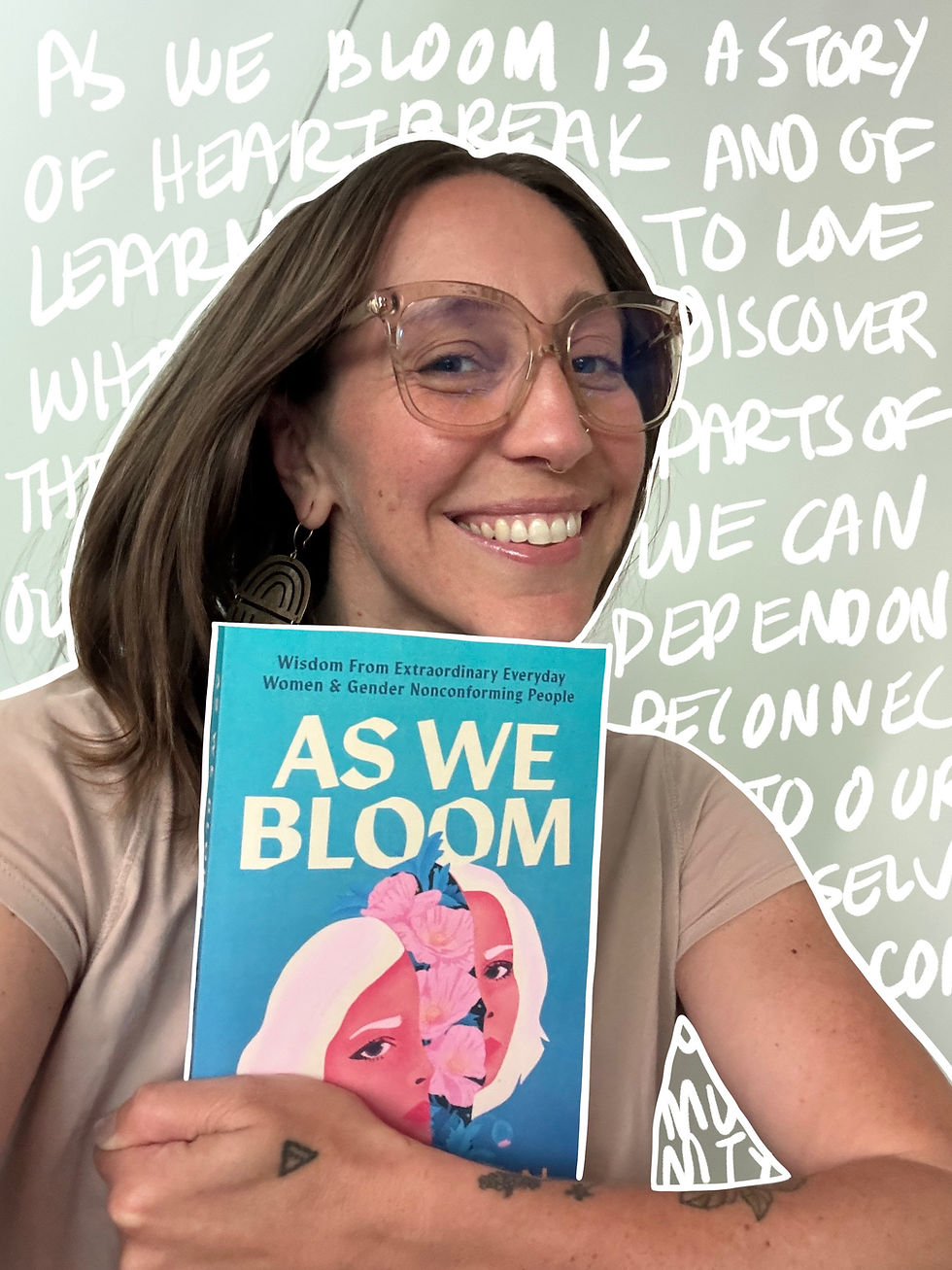
What this book means to me:
Even for a writer, and someone who just published a 374-page book, some things are still hard to put into words! As a true story from a really challenging time in my life, this book feels vulnerable and raw while twisting and turning in and out of hope, humanity, honesty and humor. It chronicles almost 10,000 miles and 20 diverse women and gender nonconforming people living outside of what American society considers “traditional,” overlapped with my own journey of healing, falling in love and rediscovering my sense of self. Oh, and of course there’s surfing!
The illustrations on the cover and inside the book were done by a friend and queer artist – @krinalisa.
In a time where our words are severely censored and LGBTQ+ books are actively being banned, debuting my book feels especially important. I hope anyone who has ever felt stuck or lost reads this book and recognizes they’re not alone, and there is no right way to live a big, beautiful life.

How long did it take, what hurdles did you overcome, and what are the main themes?
No exaggeration – it took a little more than seven years to bring this book into the world.
It started with a road trip to get out of a city that felt painful to continue living in and evolved into a journey that I realized didn’t just kick start my own healing process, but could hopefully help other people struggling with heartache and feeling lost or stuck. That turned into dozens of audio recordings to transcribe and photos to sift through, which became a very long and wordy manuscript. Around this time, I was living in Portland and struggling with my move to a new city that was grey and cold. I didn’t have any real community or friends yet, so I really immersed myself in this book. But I struggled for the first year to get my feet underneath me.
Around the time the COVID-19 pandemic upended all our lives was when I figured out I was only going to get so far editing this book on my own. I felt like I was going in circles with it, so I researched professional editors and hired Larissa, who single handedly changed the course of my book. Originally, it was just 19 interviews back to back. Larissa told me my own story as the author was the “connective tissue” missing from the book – the thing that tied all the stories together. I knew she was right, and that it meant unearthing my own narrative and sharing it in a very exposed and vulnerable way. I was up for the challenge, and in retrospect it did so much for my own healing. But it was a bit brutal (the way most healing is) to put myself back in my former self’s shoes for a while. I think it also gave me compassion for younger Mia in a way I hadn’t experienced before.
When we moved to Hawai’i a few years later, I was spending most of my time pitching publishers. It was an extremely tedious process, but I kept telling myself, "you only need one." After months of searching, querying and pulling together packages for publishing agents to consider, I finally found one. I teamed up with Indigo River Publishing and then – if you can believe it – we edited the book together for more than two years after that. I think by the end, I was on version 19 of the manuscript. Being on version 19 of a 374-page manuscript took a level of determination and attention to detail that I wasn’t sure I had, and perhaps still don’t fully comprehend! But the team was wonderful and very supportive, and I think I had a vision that I was absolutely unwilling to sacrifice.
Now, when people read As We Bloom, I hope they allow themselves to feel some of the primary themes of the book; like what it means to really know and love yourself, the courage it takes to be who you are in a world that doesn’t make it easy, and power of community and storytelling, and the winding road that we all find ourselves on at one point or another that, if we see it through, will lead us to the discovery of some of our grandest adventures and our biggest, most fulfilled lives.


Other writers, artists and individuals who have inspired you?
Oh gosh, so many!
I’m perpetually inspired by women surfers riding longboards or single fins. Specifically, the way Leah Dawson and Chloe Calmon surf – it’s like a dance I could watch forever (plus they’re both extremely kind people, which is equally inspiring).
I’m inspired by female photographers, including Sachi Cunningham who is legendary when it comes to chronicling women’s big-wave surfing and their pursuit of pay equality, and my friend and incredible surf photographer Ana Catarina who generously shares her knowledge and advocates to bring more women into surf photography.
I’m inspired by writers who weave together surfing and social issues in their work because politics is not separate from us. Lucy Small does this beautifully as a surfer, journalist and filmmaker. Liz Clark, author of SWELL and environmental activist, was also one of my biggest inspirations in writing this book. (If you haven’t read SWELL, do it right now!)
I’m inspired by my friends, colleagues and the people around me on a regular basis. Mixte Communications, the social justice communications agency I work with, just won a national award for centering diversity, equity and inclusion in our company’s strategy and culture, which feels especially meaningful in a moment where our federal administration is actively targeting those very words.
Particularly right now, I’m inspired by small, almost unnoticeable acts of kindness from strangers. It’s so easy to fall into despair from the national news headlines and the atrocities happening in the world right now, the most inhumane of which unfold right before our eyes on social media every day. When it feels too heavy to carry, the thing that brings me the most levity is going outside in my own community. The birds chirping. The kids playing. The wind blowing the leaves in the trees or rippling the surface of a wave. People walking their dogs or paddling out into the line up giving me a smile as they pass. These extraordinary beauty of the natural world and ordinary acts of human kindness are all around us and it sounds silly, but right now, that’s actually inspiring me quite a lot.
Any advice you want to share with us about writing, surfing ?
I would actually extend the same advice to anyone who wants to write well as I would to anyone who wants to surf well: Allow the process to be messy. You don’t just sit down and write a book one day (trust me, I tried) and you don’t just pick up a board and cruise on every wave (I also tried). You have to eat shit, metaphorically and literally. You have to try something and when it doesn’t work, get back up and try something else. Go into the process expecting that and allow yourself to be fully humbled by something bigger than you. What’s on the other side of the struggle will be worth it, and even more beautiful, because of it.
What are you listening to these days ?
I enjoy creating seasonal playlists, and here's my latest one to share with the Withitgirl community—it feels quite personal! Throughout the season, I add songs based on my life's events and the tracks that carry special memories during those months.
Mia Bolton (she/her) is a queer writer, water photographer, and Martha Beck Certified Wayfinder Life Coach. Her writing and photography have been featured in national and international surf and adventure magazines and publications, and her debut novel, As We Bloom: Wisdom From Extraordinary Everyday Women & Gender Nonconforming People, celebrates people from all walks of life who have found joy in the untraditional and remind us there is no one right way to live. Mia is a Vice President at Mixte Communications, a social justice communications agency that partners with national organizations working toward health, justice and freedom for all people, Mia’s award-winning work has shaped how she sees the world and her own advocacy. Outside of her many perpetual projects, Mia can be found learning to rest; surfing, diving, and taking photos in the ocean; or spending time with her wife Devin, in the San Francisco Bay Area, trying to teach their three cats to walk on a leash.
Photo & Graphic Credits
Artful Portraits of Mia by Cat Coppenwrath, website @catcoppenrath
The illustrations (maps and cover art) Karina White @krinalisa
The rest of the film and doodles by Mia Bolton
Release date: June 10, 2025
Launch Party: June 13, 2025, @winedownsf in the SoMa neighborhood in San Francisco!
Where to buy: As We Bloom: Wisdom From Extraordinary Everyday Women & Gender Nonconforming People, at Bookshop.org
We definitely recommend buying with this link, as it supports local bookshops all around the country!
Some of the Books that inspired Mia to write Part One
Hood Feminism by Mikki Kendall (@karnythia)
Everybody Else Is Perfect by Gabrielle Korn (@gabriellekorn)
Bad Feminist by Roxane Gay (@roxanegay74)
Women Who Run With The Wolves by Clarissa Pinkola Estés, Ph.D. (@clarissapinkolaestes)
Hope In The Dark by Rebecca Solnit (@rebeccasolnit)
One Life by Megan Rapinoe (@mrapinoe)
Shrill by Lindy West (@thelindywest)
To Shake The Sleeping Self by Jedidiah Jenkins (@jedidiahjenkins)
© 2000-2025 withitgirl. All rights reserved. We appreciate your feedback!


Comments